
Trail de la Côte Roannaise 2024: the land, the roots#
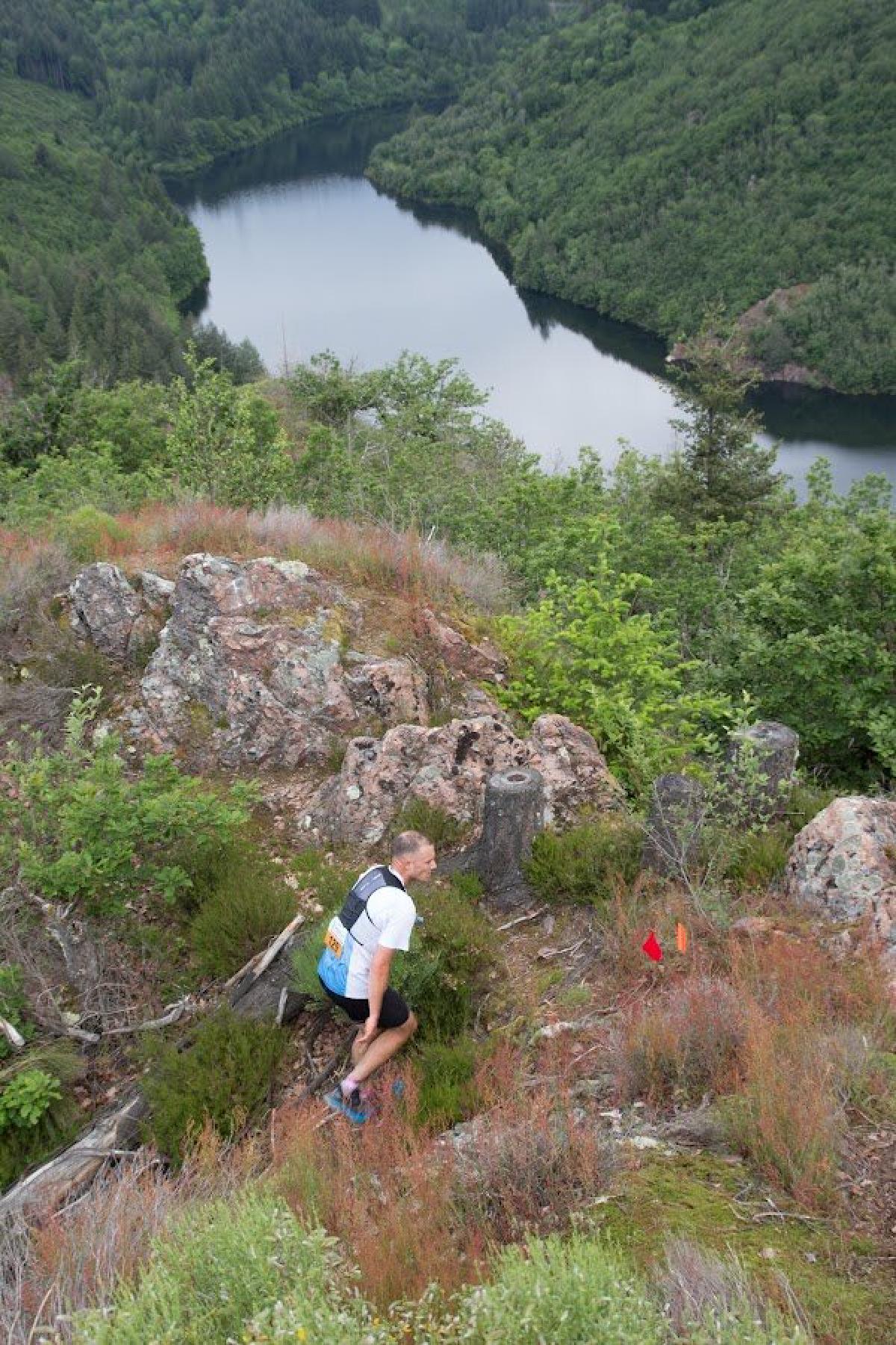
Some races you choose for the course, others for the clock. This one I chose because it runs through home. Not home in the loose sense, home in the literal one: the côte roannaise is where I grew up. During the race I passed within a few metres of my old school, of the places where I played as a child. This is the land, these are the roots.
And incidentally, it is the steepest trail race I have run: 41.7 kilometres for 2,337 metres of climbing, which is 56 metres of climbing per kilometre. For comparison, my most mountainous bike races come in around 23.
Ride over, sleep at your parents'#
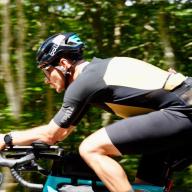
The travel set the tone for the weekend: I rode over from Clermont by bike the day before, and slept at my parents’. There are more sophisticated race logistics; there are not many more pleasant ones. You cross the hills on your own legs, you park the bike in your childhood garage, you have dinner with your family, and the next morning you race on your own paths.
Start on Sunday 26 May 2024, at 7 am, from the community hall in Renaison. The event offers three distances (41.6, 28.9 and 18.4 kilometres), and the long format advertises 2,100 metres of climbing with three aid stations.
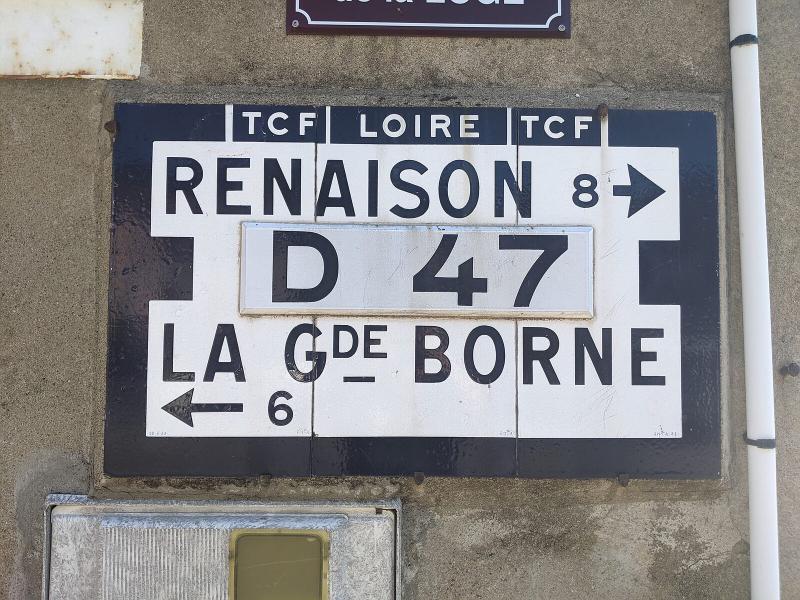
The terrain is that of the côte roannaise: the first foothills of the Monts de la Madeleine, west of Roanne, with their hillside vineyards (a discreet appellation barely known beyond the département) and, above them, forest and ridges.
Climb, descend, repeat#
Which is exactly what this route does. You cross no major pass, you tick off no symbolic milestone: you string together short, sharp climbs separated by equally steep descents, for forty kilometres.
That kind of profile has a physiological consequence that big cols do not: you never find a rhythm. On a long ascent the body settles into a regime and stays there for an hour. Here you alternate every ten minutes between maximal effort uphill and eccentric work downhill, and it is that alternation that destroys your legs.
My data says as much: an average of 160 bpm, peaking at 183, over four and a half hours. That is the highest average heart rate of any trail race I have recorded, well above the Ultra Volcanique, which is twice as long.
Cramps, Pacôme, and a river#
The body actually sent its invoice earlier than expected: cramps arrived quite early in the race, and it surprised me. On this profile, with that permanent alternation, they give no warning. There was not much to be done, except the only valid option: keep going.
I was not alone. Pacôme was there, and we ran half the course together, taking turns on the climbs and sharing the descents. Then, at halfway, I flew. It is the kind of moment you do not really decide: the legs turn, cramps or not, and you find yourself alone at the front.
And it was during that flight that the scene I will never forget took place: I passed Dawa Sherpa while he was drinking water from a river. The winner of the first UTMB, kneeling by a stream in the Monts de la Madeleine, drinking from the source as he must have done a thousand times in the Himalayas. The whole man fits in that image.
Second, ahead of a legend#
I covered the 41.7 kilometres in 4 hours 29, of which 4 hours 26 moving, at an average of 9.4 kilometres per hour. And I finished second.
It is not the placing that makes this race special, it is who was behind me. At the finish line, I came in ahead of Dawa Dachhiri Sherpa.
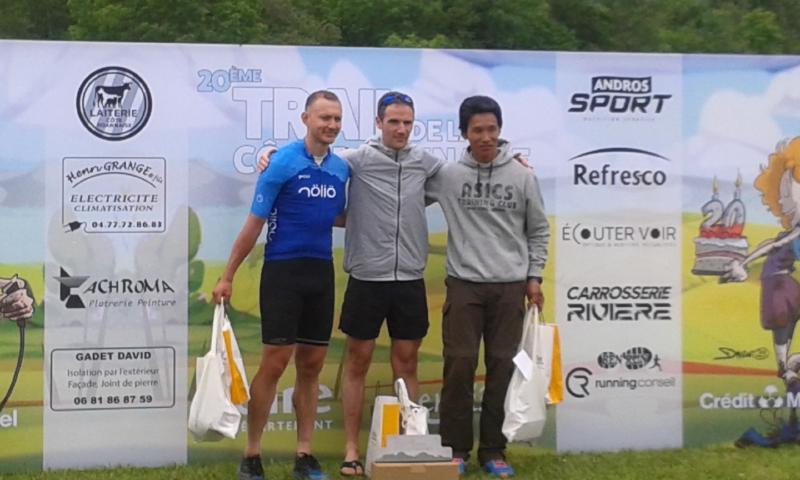
For anyone who does not know the name: Dawa Sherpa was born in Nepal in 1969, has won more than a hundred races, and is the winner of the very first Ultra-Trail du Mont-Blanc, in 2003. He also took the Templiers in 2005 and the TDS in 2012. He is one of the founding figures of world ultra-trail running, and incidentally the man the Nepalese Olympic federation sent off to learn cross-country skiing so that Nepal would have a representative at the Winter Games.
Perspective is obviously required. Dawa Sherpa was fifty-four that day, he had long stopped racing for the win, and a Sunday in May in the Monts de la Madeleine is not the UTMB. But none of that changes the fact of appearing on the same results sheet as him, a few lines higher up.
And that was not even the best part. We had the good fortune to talk with him at length. It was full of wisdom, a life lesson. You rarely meet people who have achieved that much and speak about it with that much simplicity; you walk away from conversations like that with something that lasts longer than a medal.
The perfect day#
The day had more in store.
My girlfriend at the time won the women’s race. A double on the same finish line, a few minutes apart, on the paths where I grew up: you cannot script these things.
And there was my dad’s sentence, at the finish: it was the perfect day. Coming from him, on this land, it meant a great deal to me. Times get forgotten, results expire; sentences like that do not.
Terrain that deserves better#
What I want to say to finish fits in one exclamation: what a beautiful region this is!
The Monts de la Madeleine sit wedged between the Auvergne and the Beaujolais, and they exist on no runner’s mental map. Yet they offer a climbing-to-distance ratio that many Alpine massifs never reach, well-kept paths, forested ridges and a balcony vineyard above the Roanne plain. I am perhaps poorly placed to be objective here, these are my roots. But roots have that advantage: you know the terrain by heart, and you know exactly what it is worth.
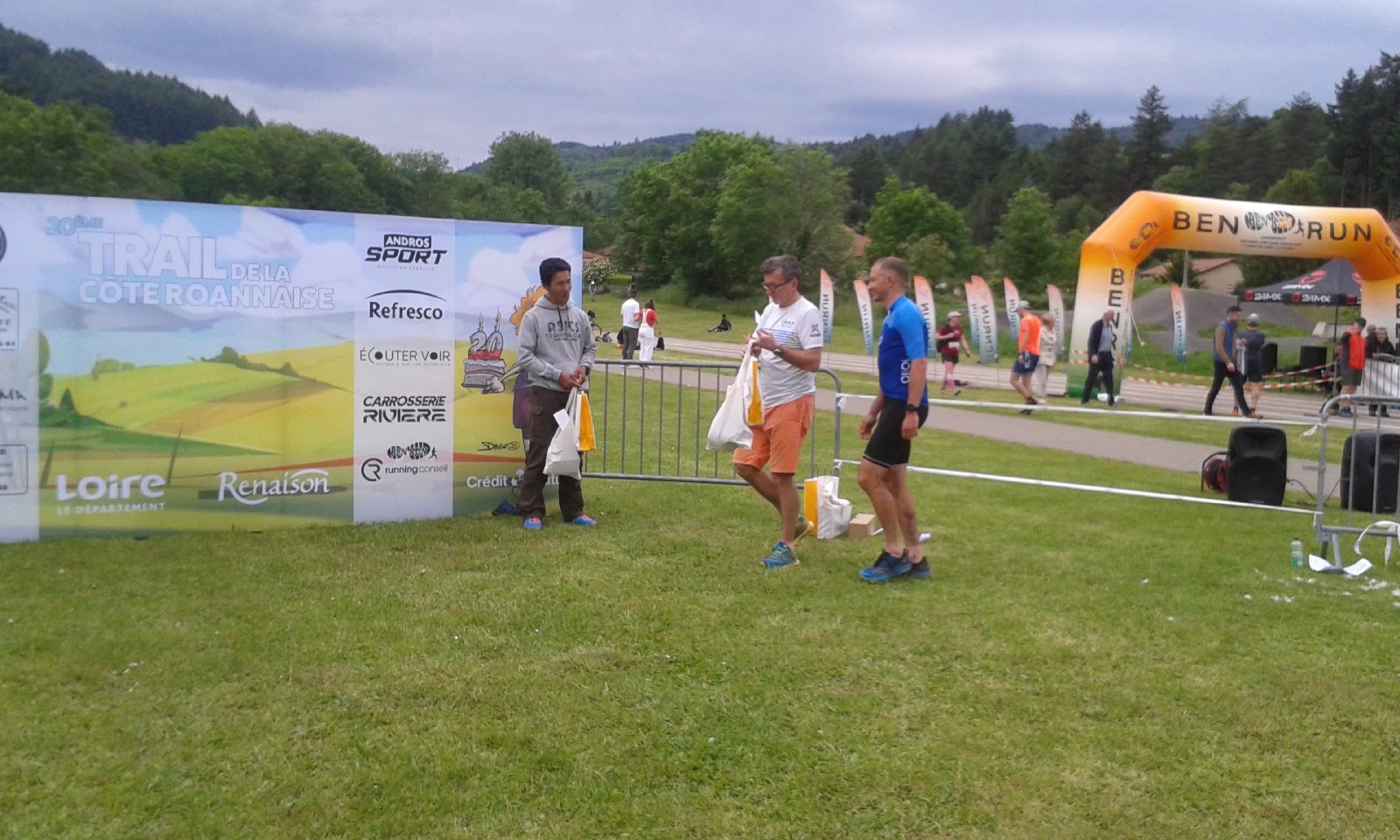
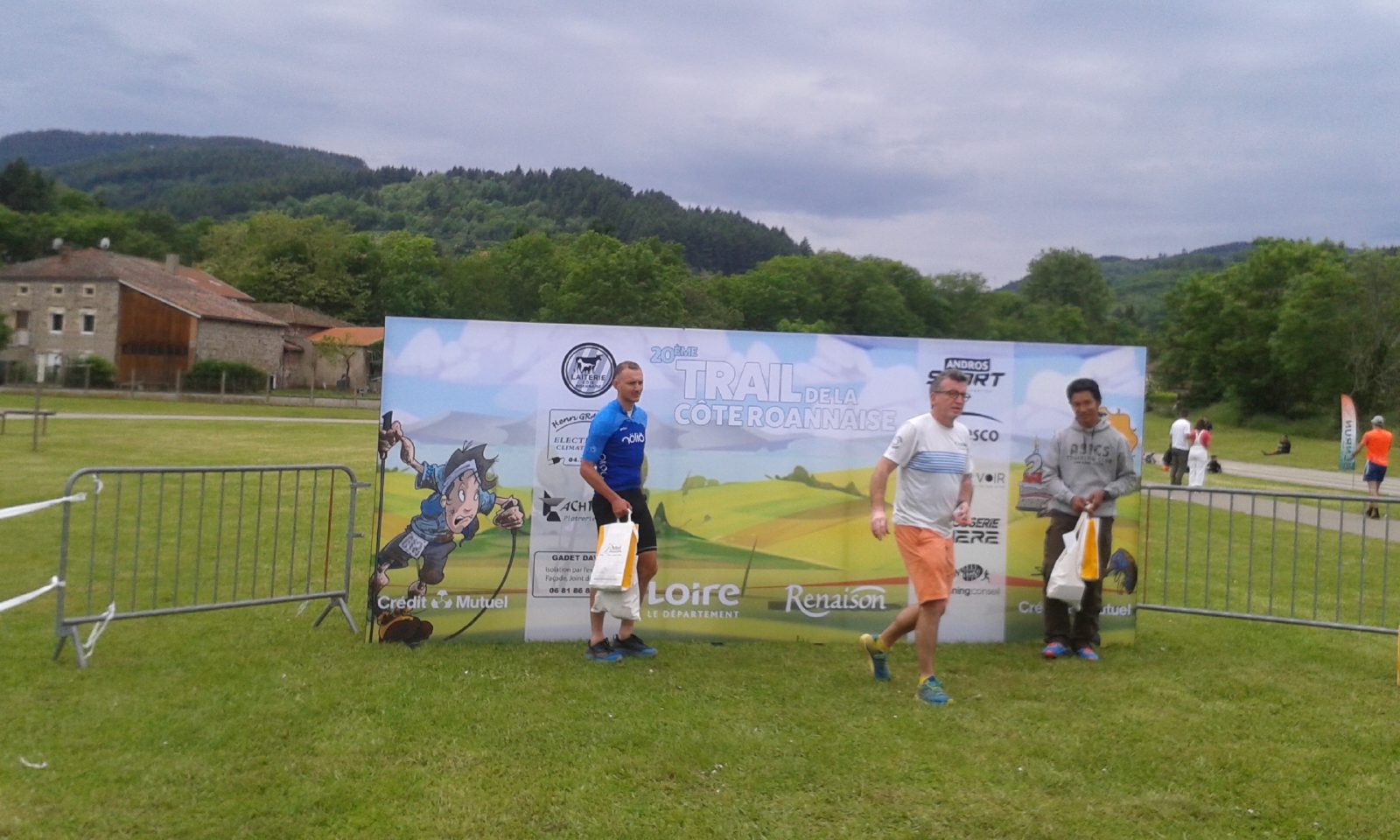
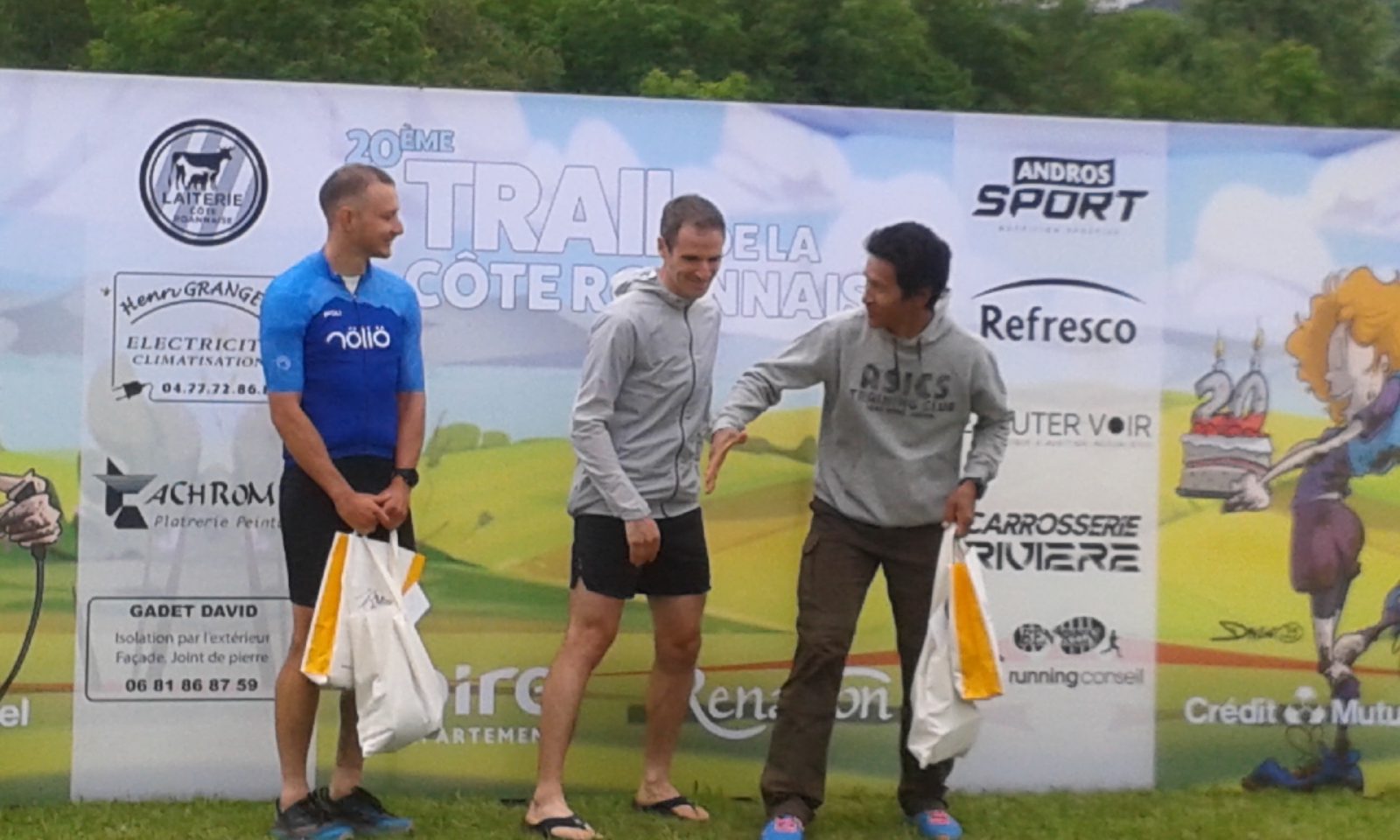
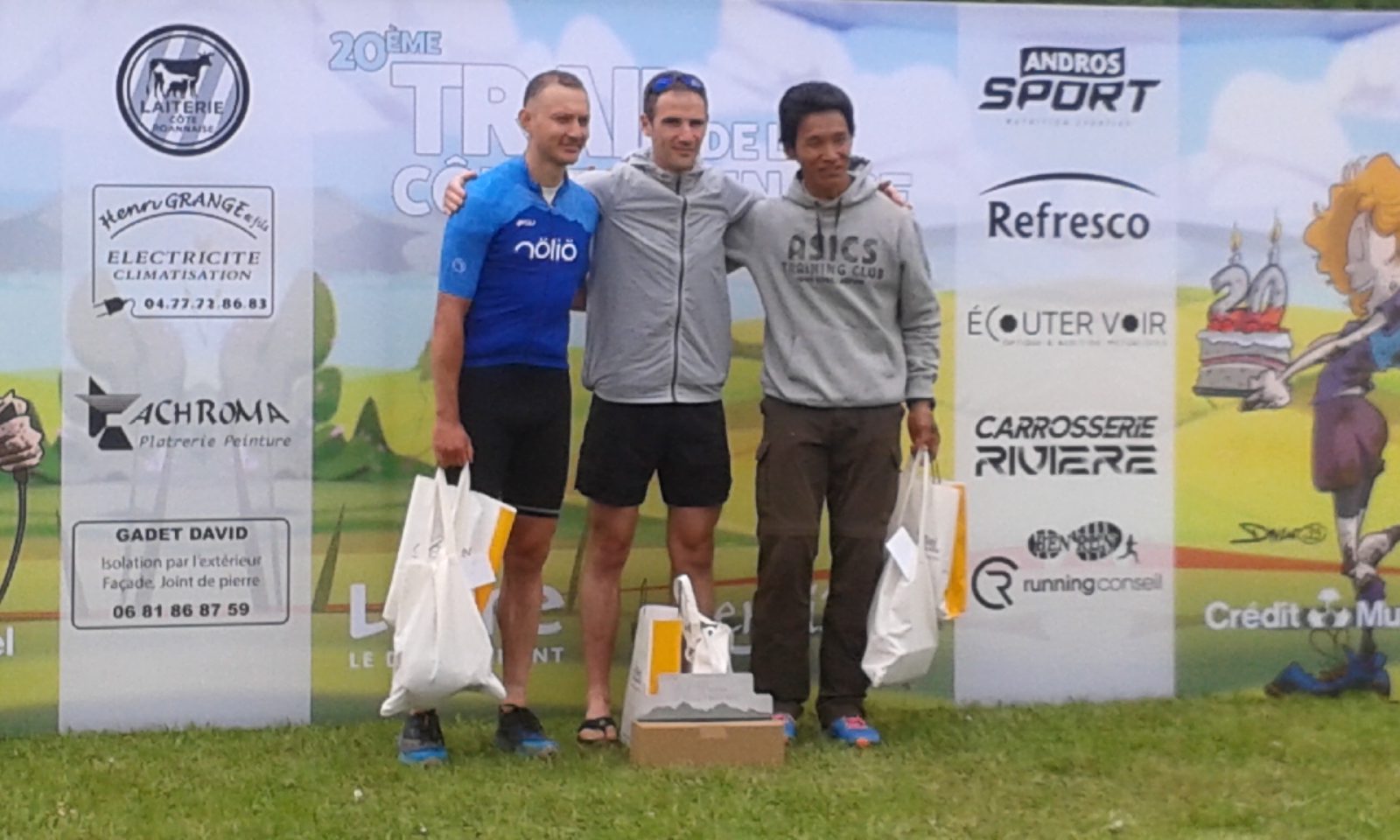
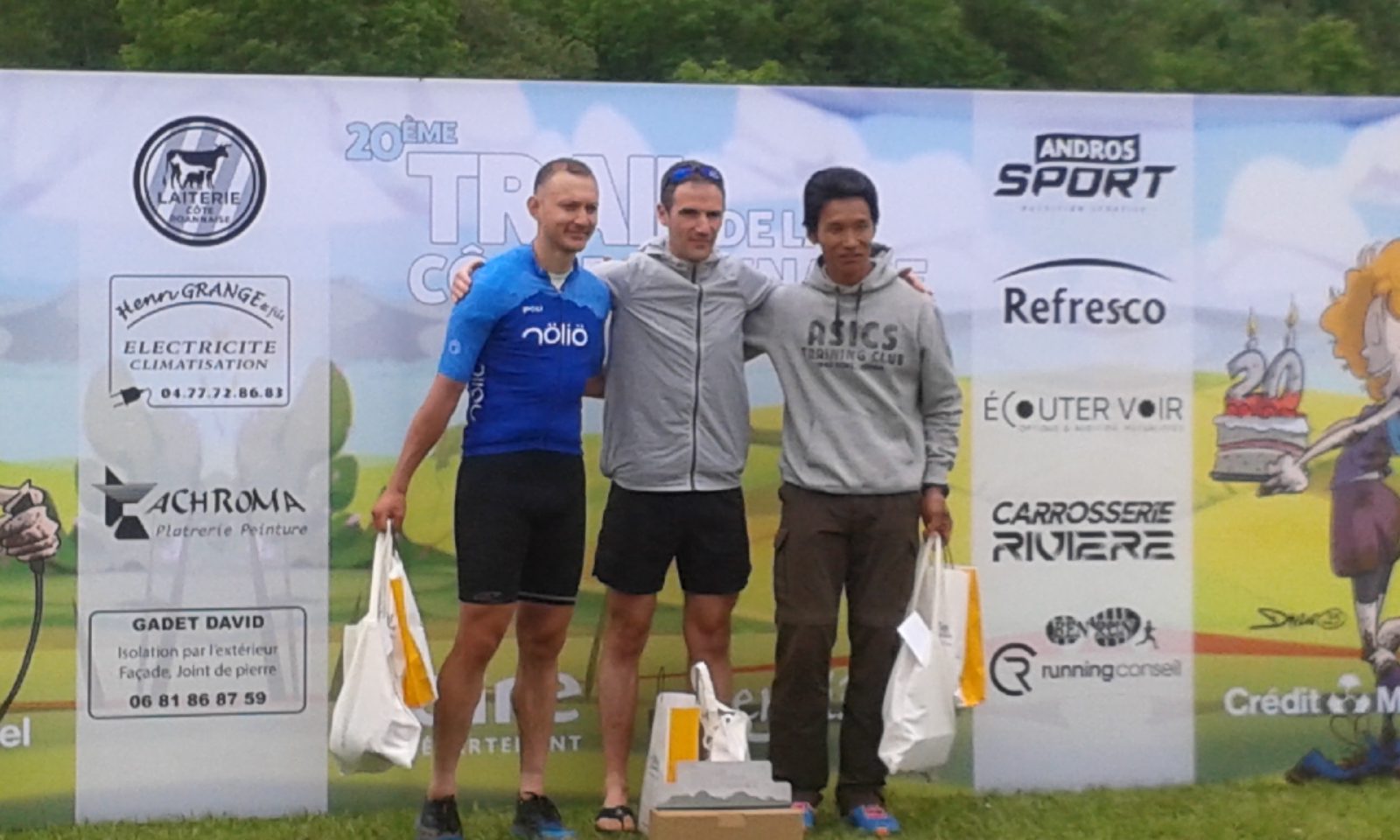
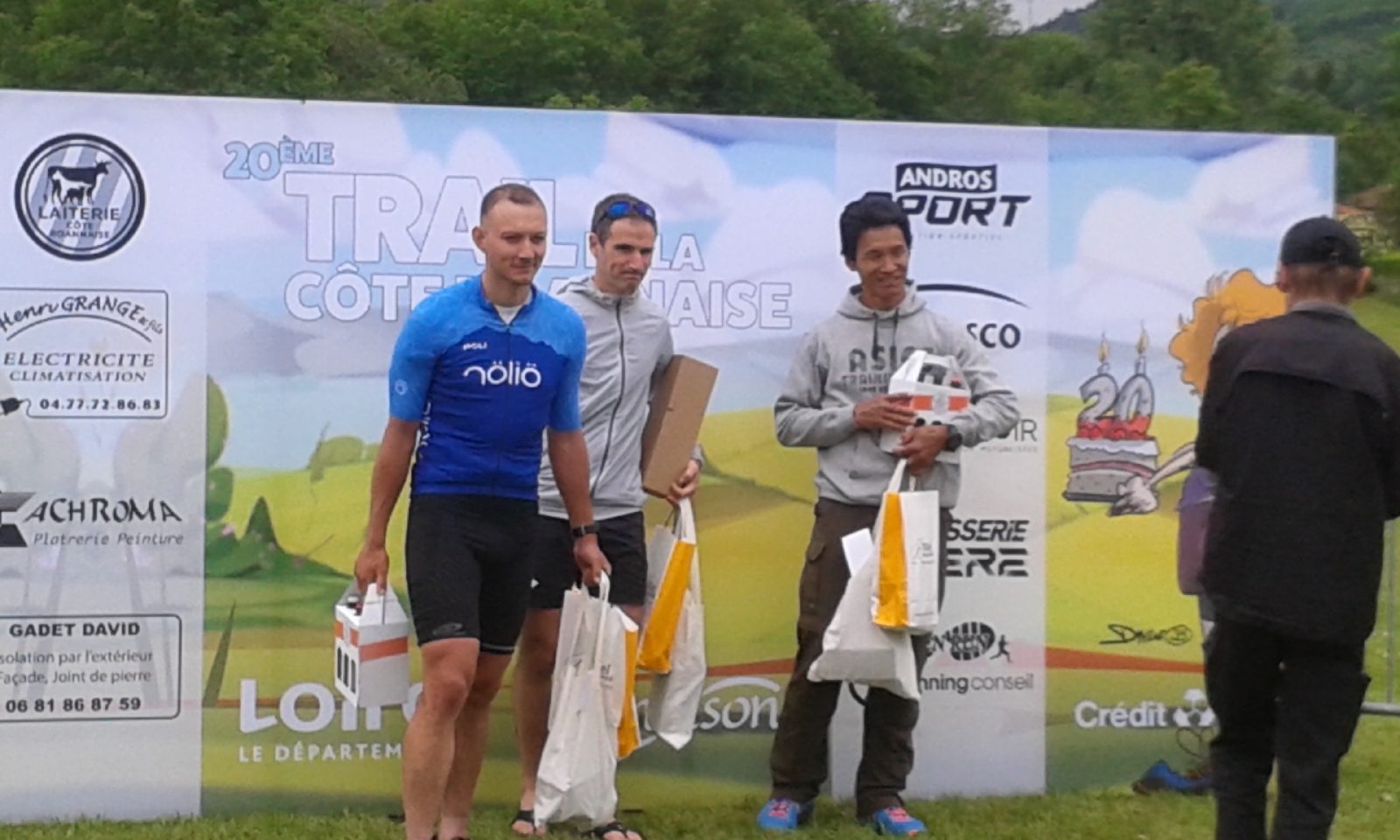
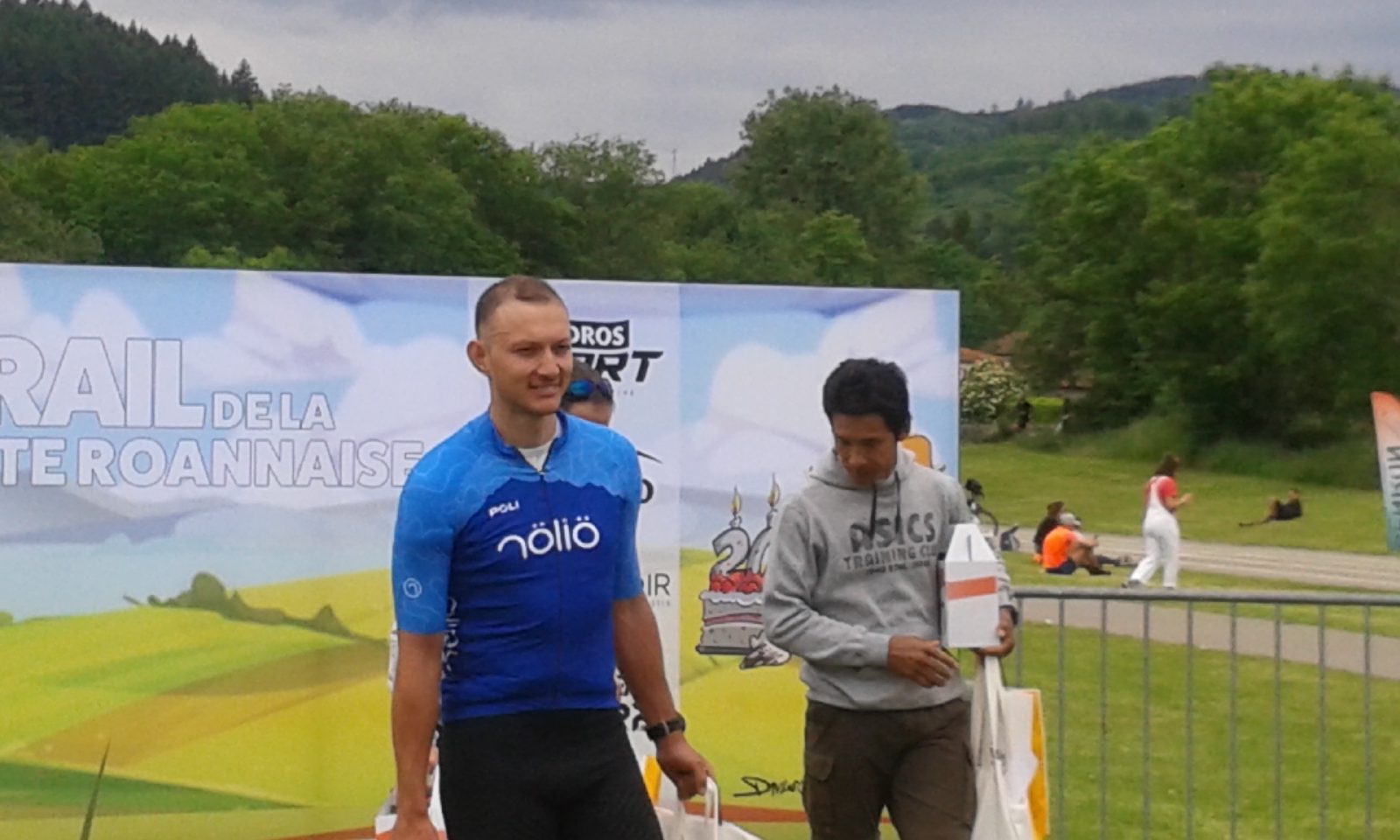
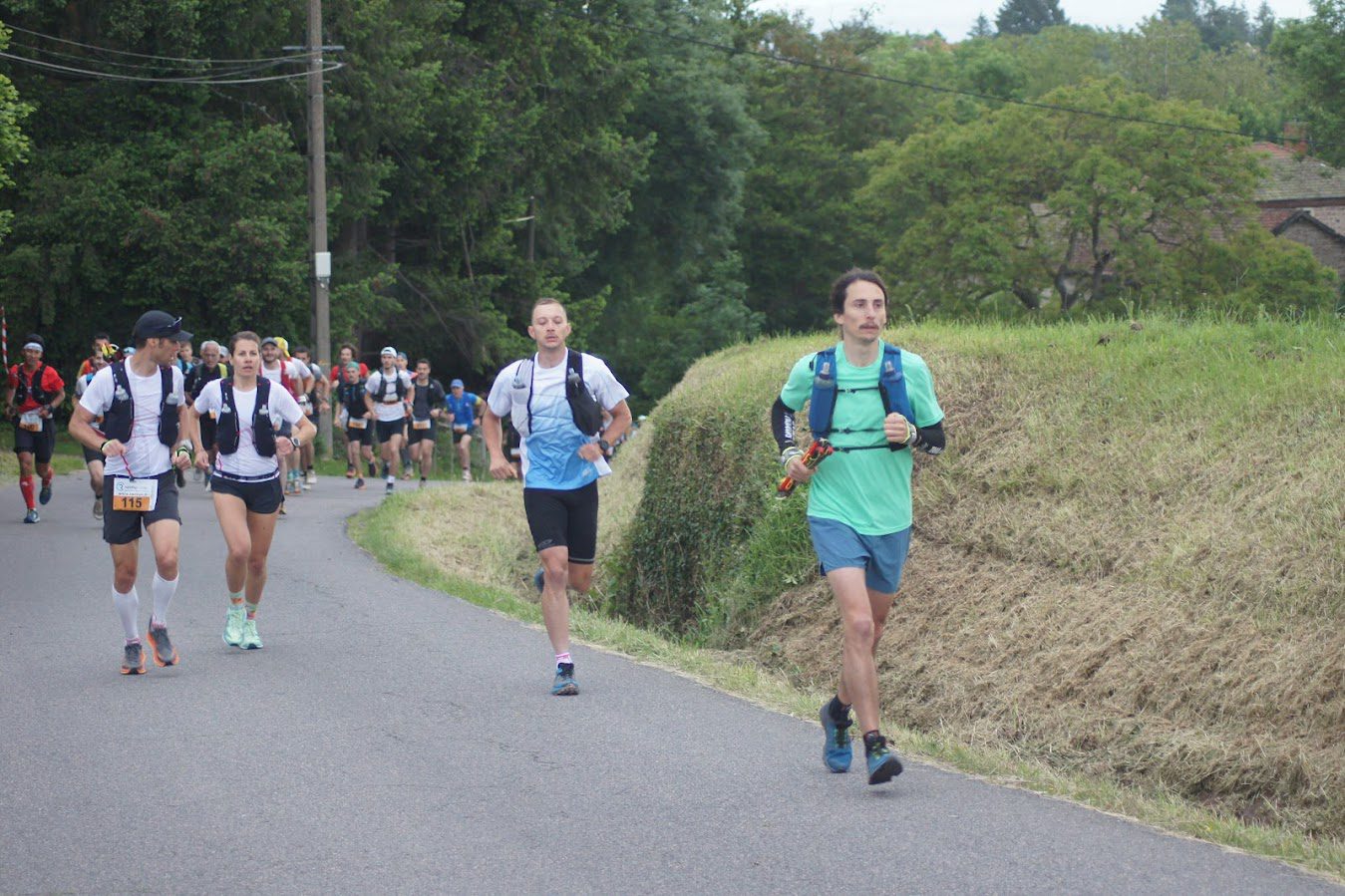
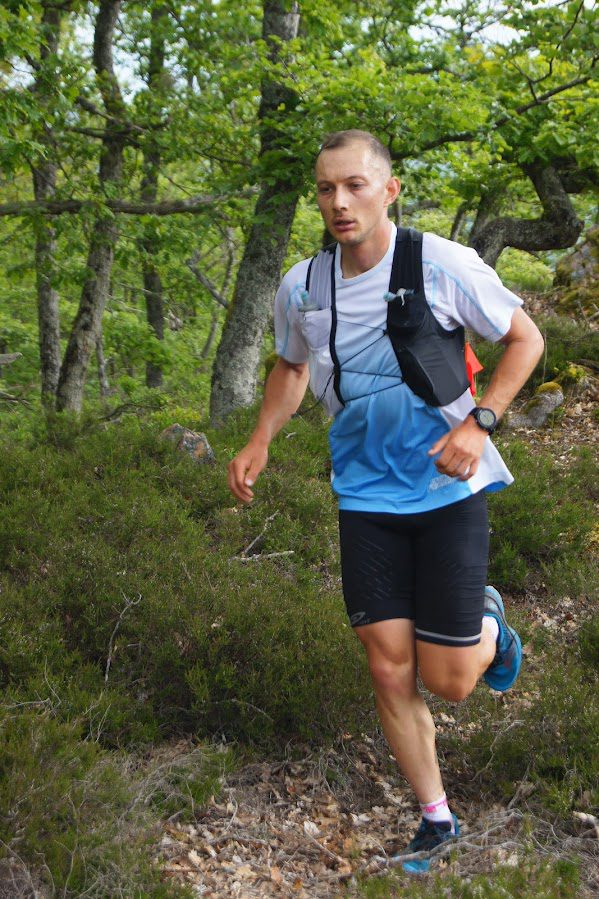
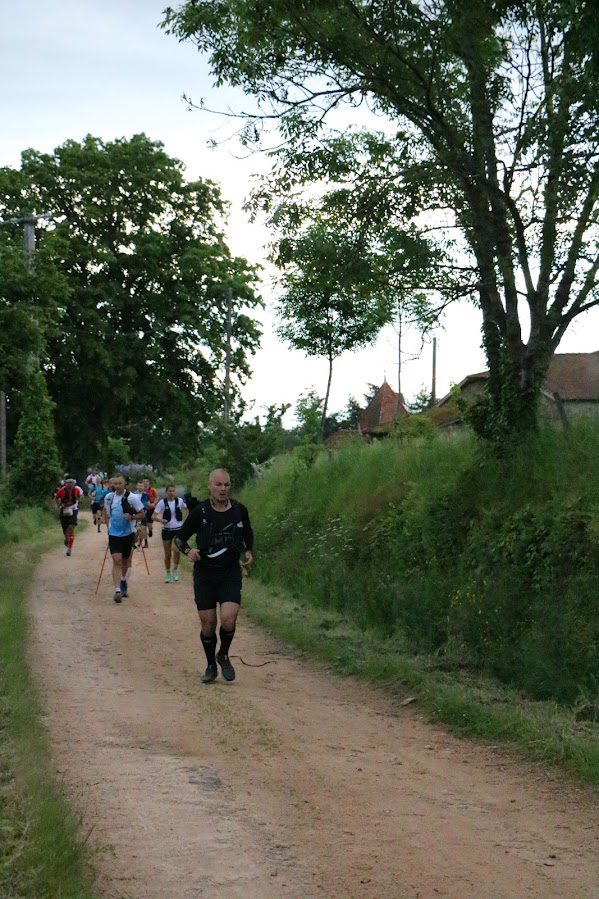
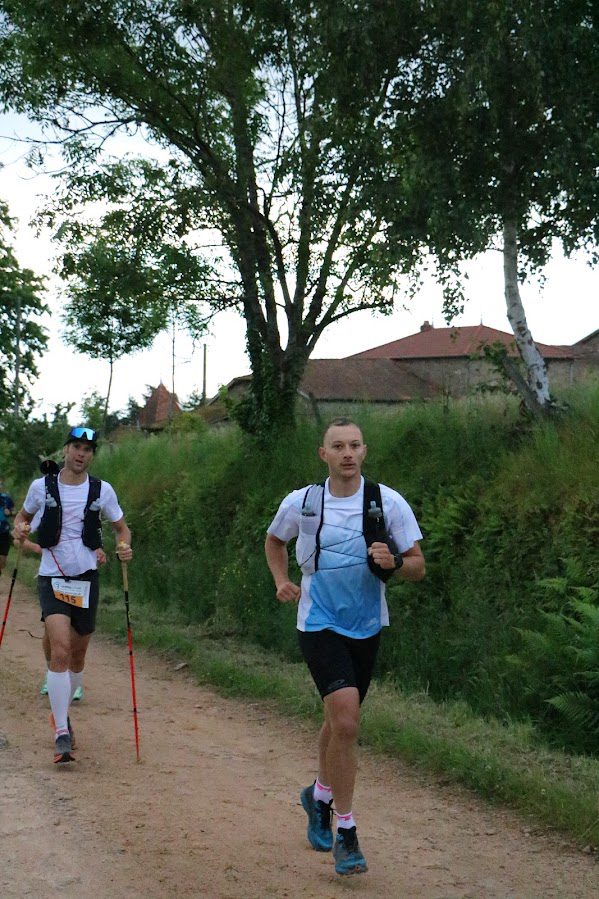
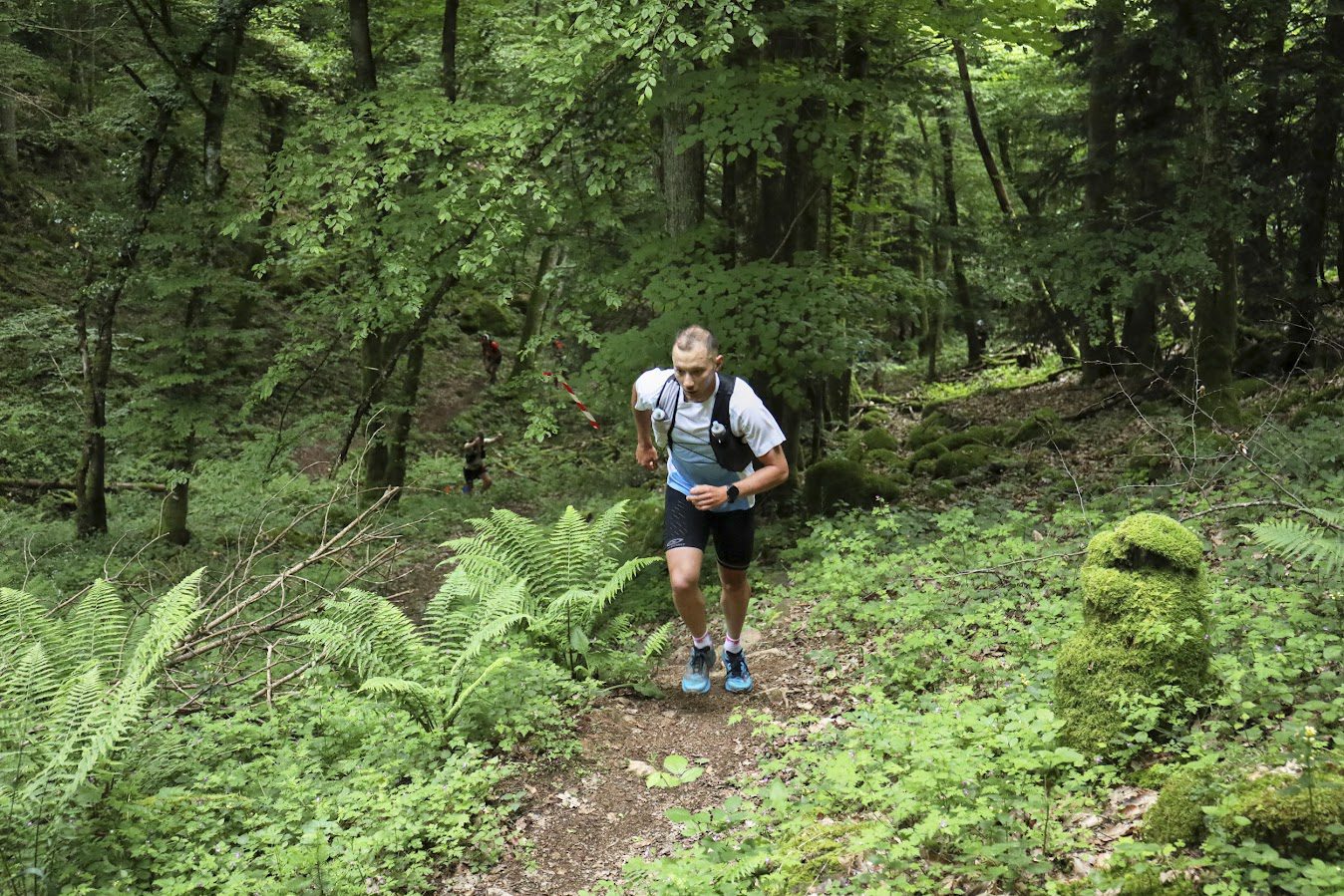
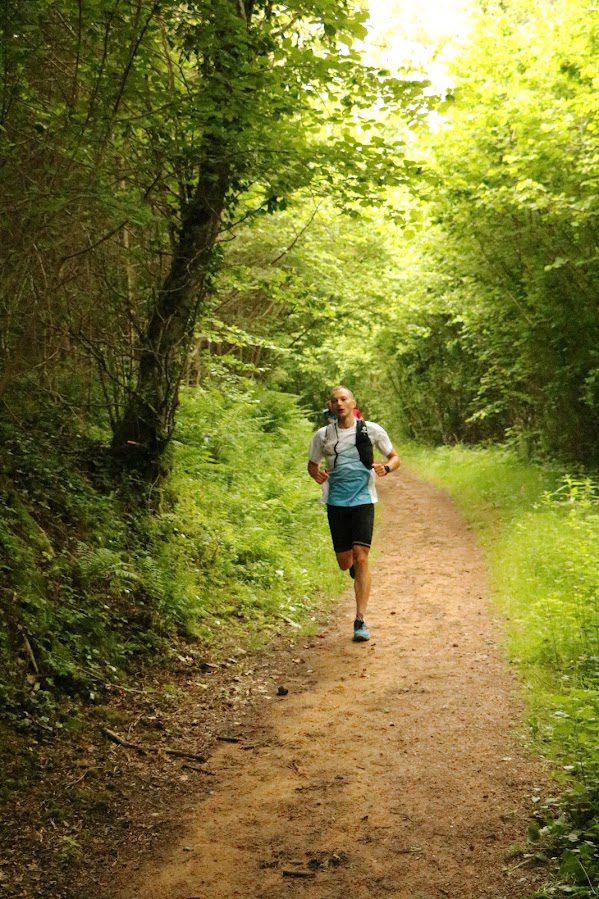
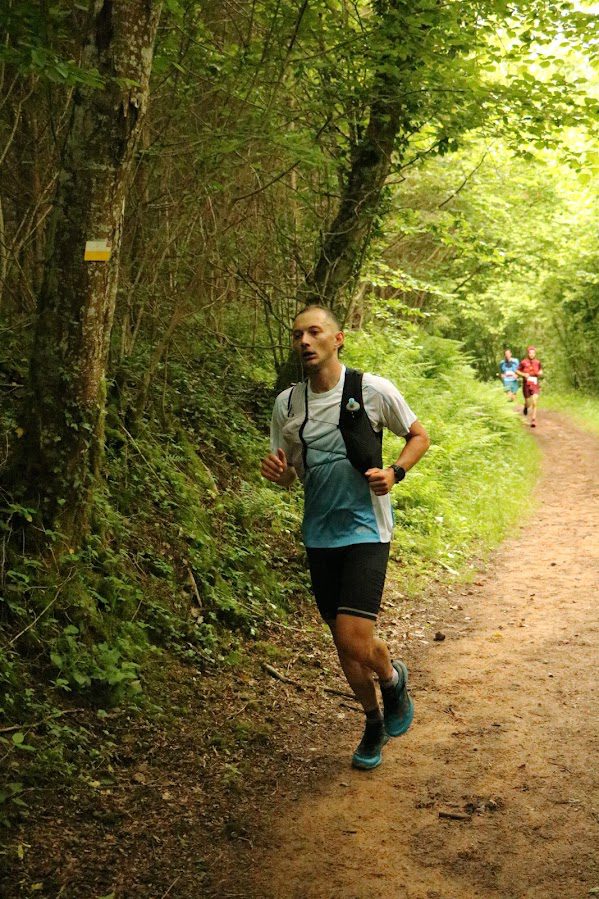
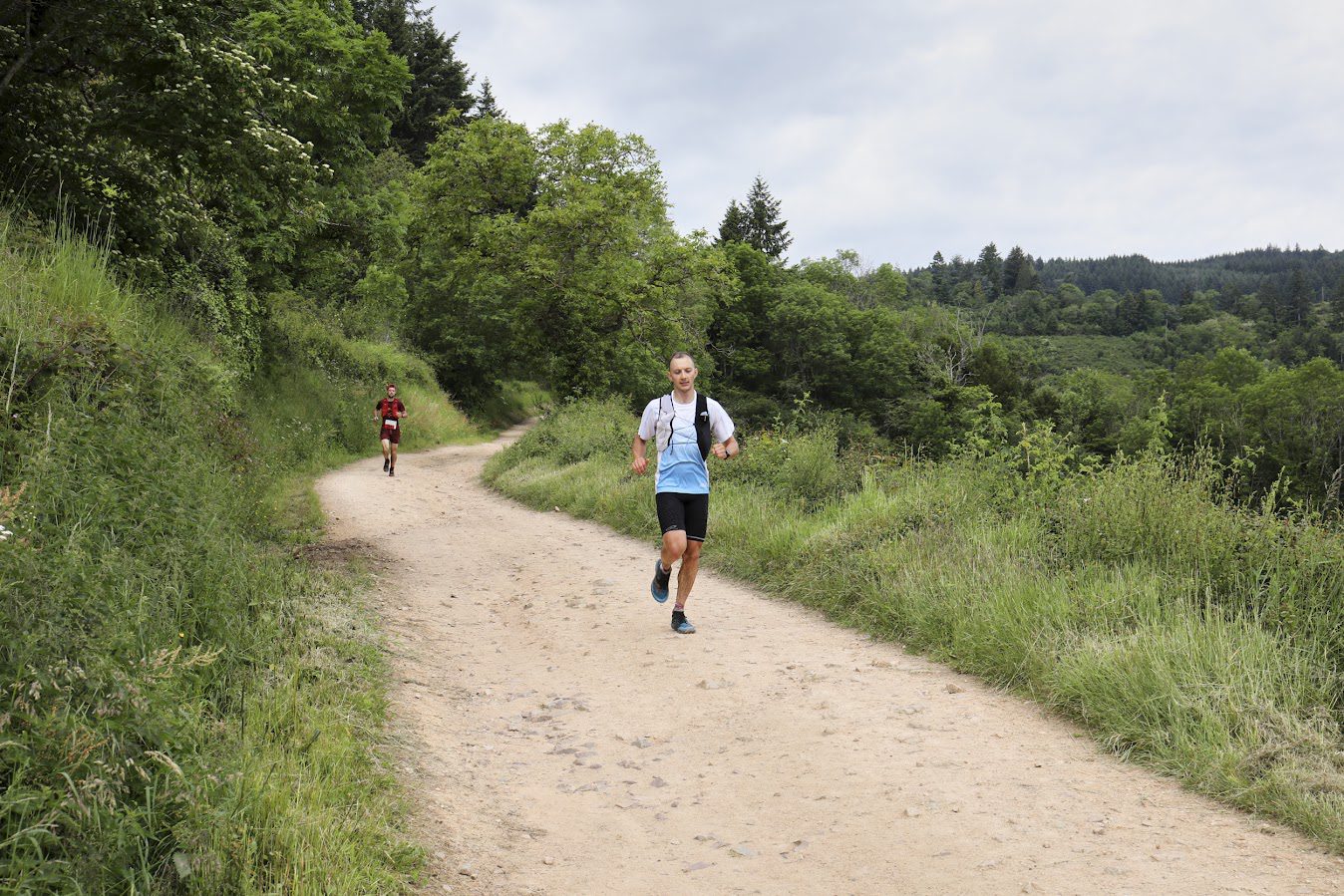
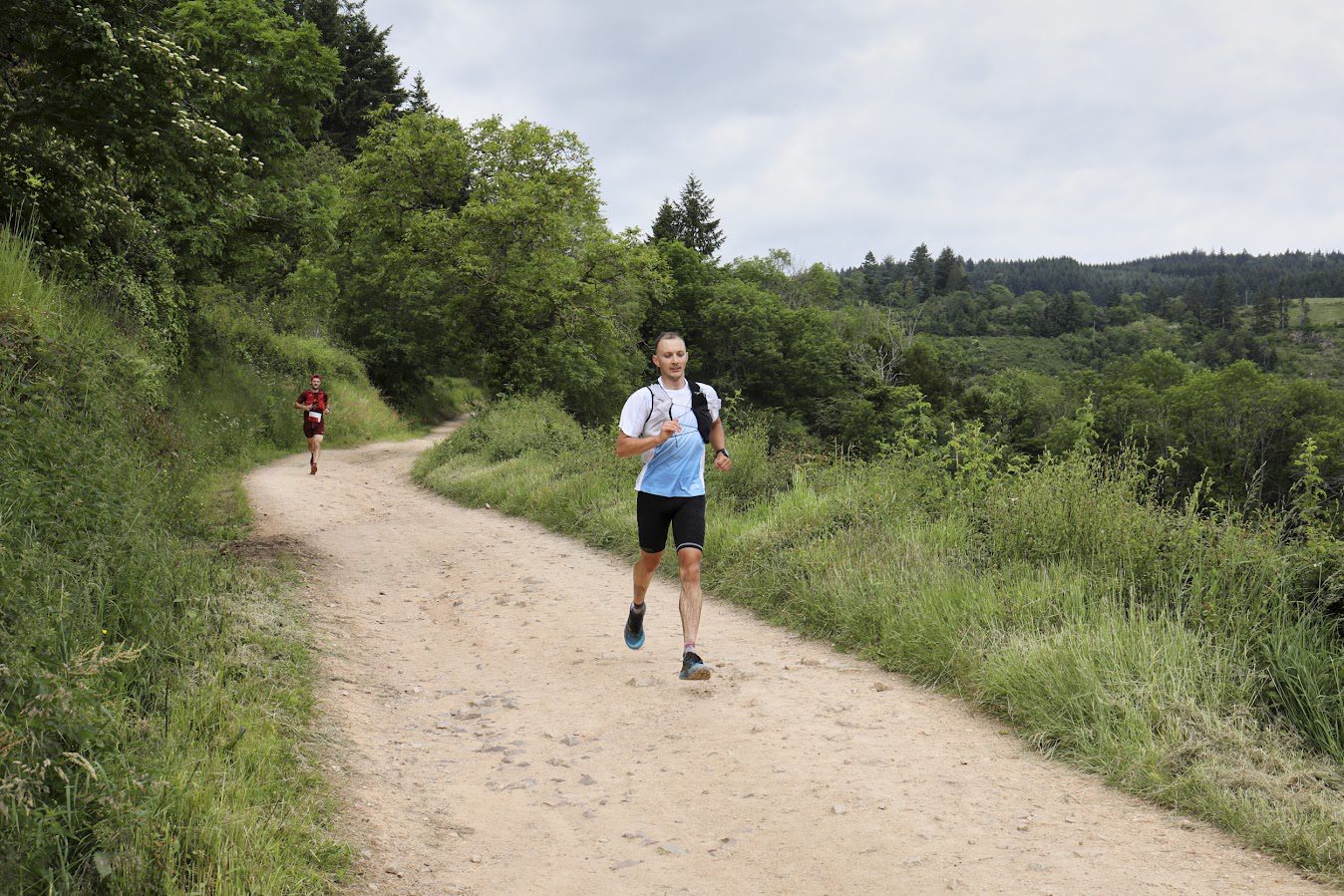
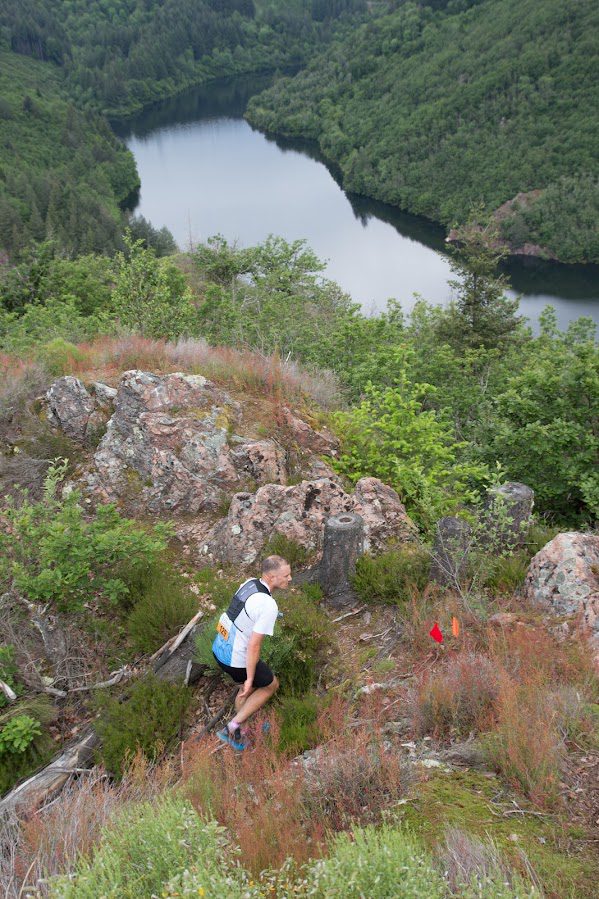
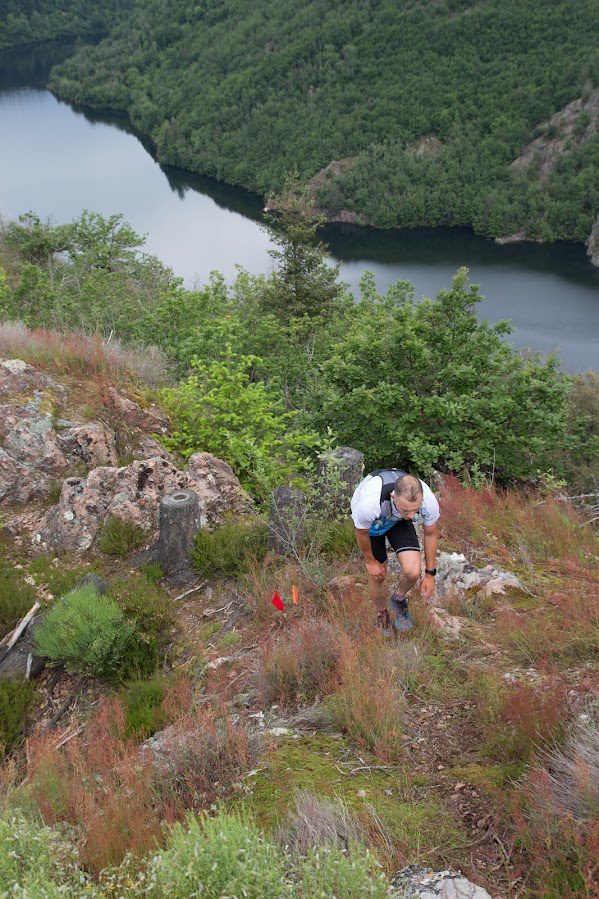
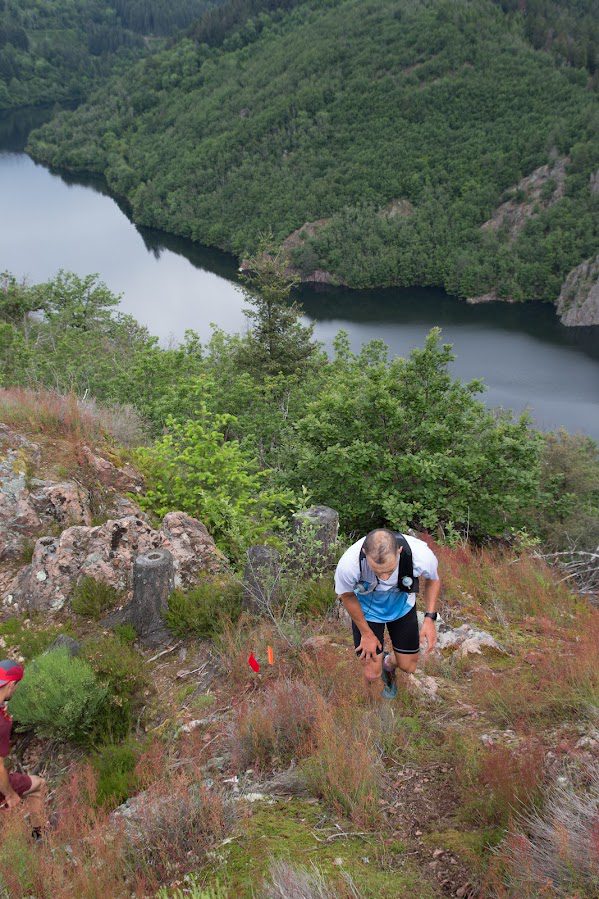
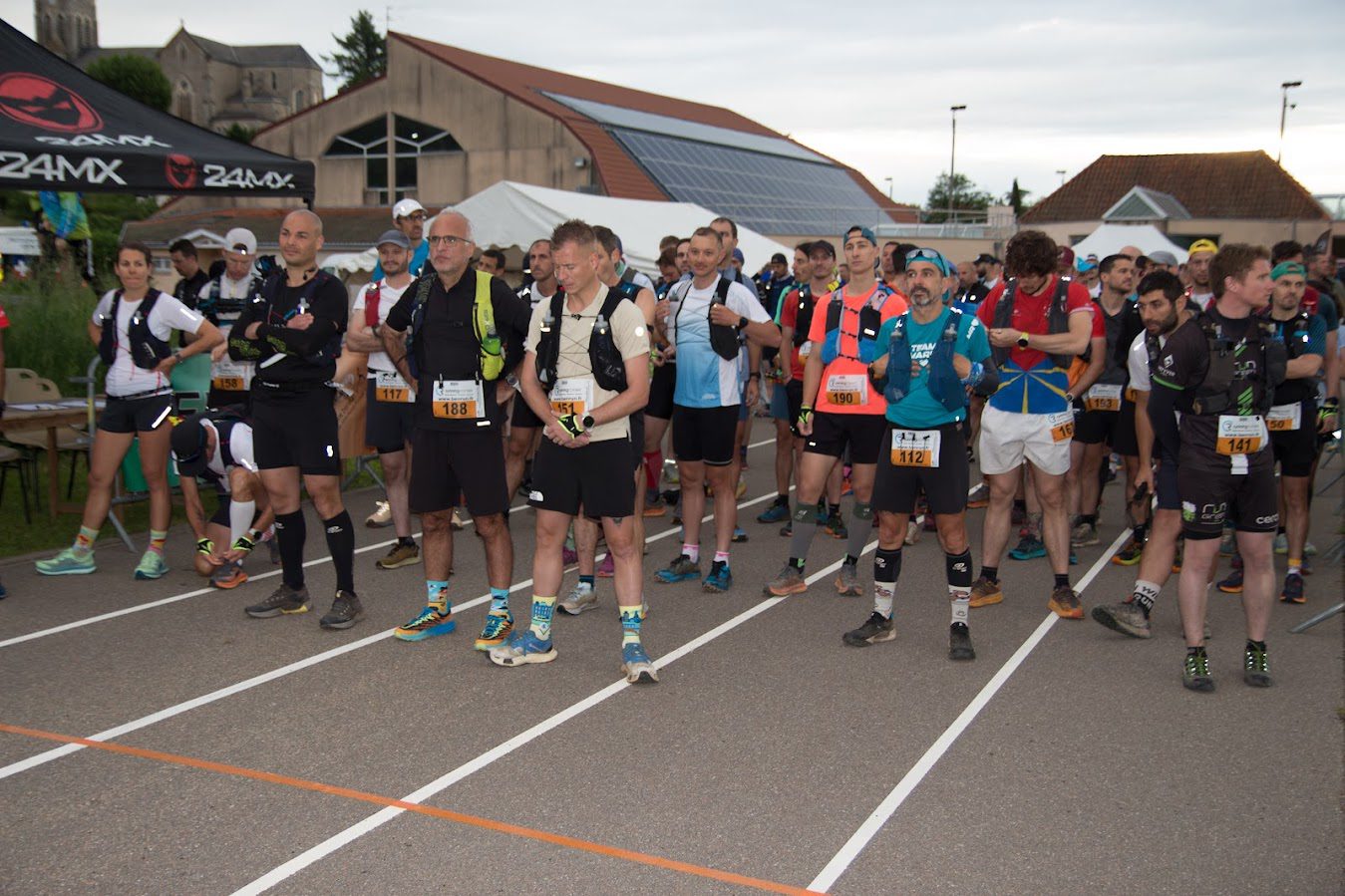
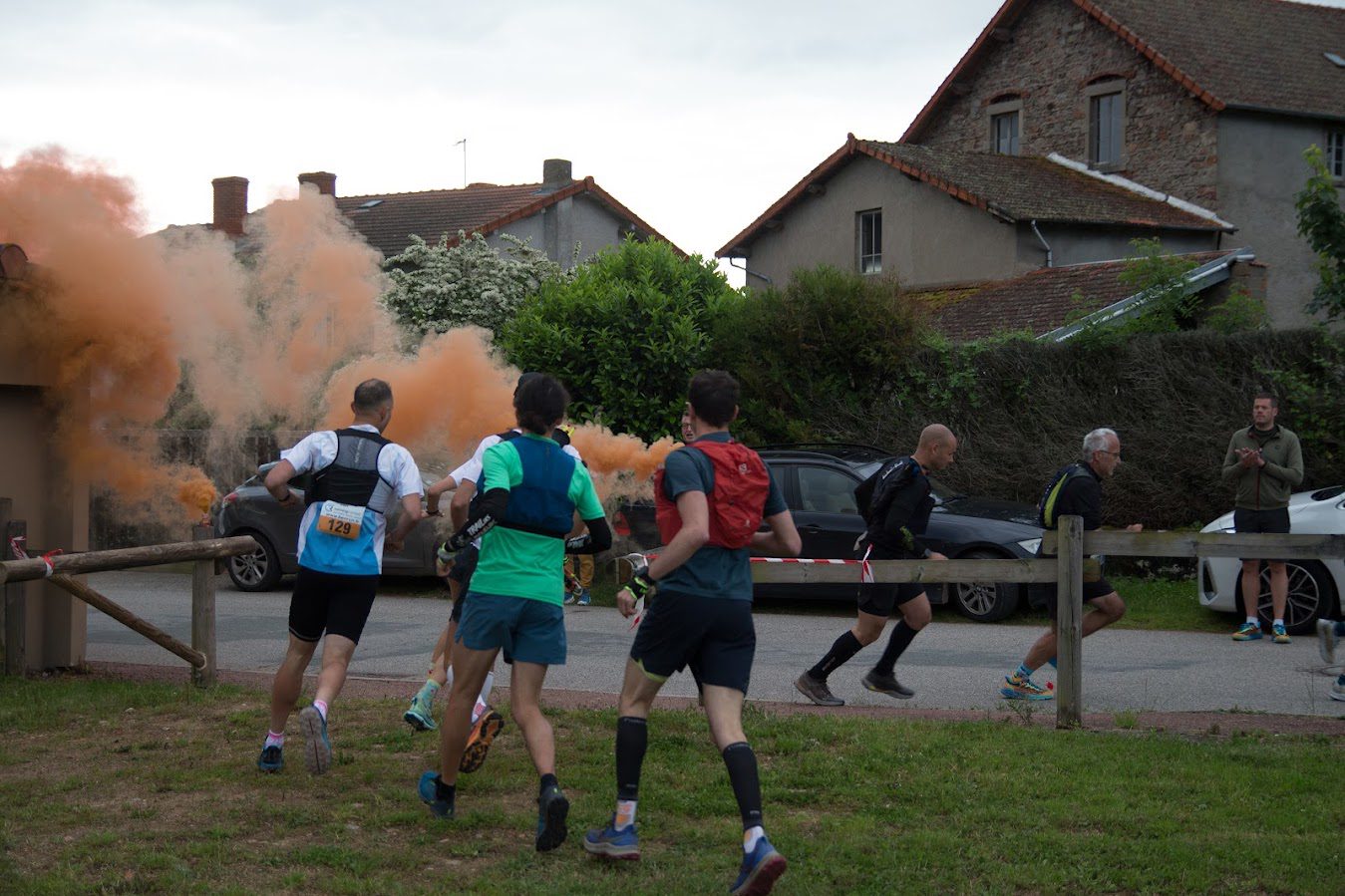
Photo credits#
The race photos come from the Trail de la Côte Roannaise organisation (CRRA) and from people close to me. The Monts de la Madeleine illustration comes from Wikimedia Commons and remains under its original licence:
- Plaque Michelin aux Noës: Sebleouf, CC BY-SA 4.0